
The Madaxeman
Madaxeman.com's Home Page
  • Home
  • Latest Posts
  • Links Page
  • Battle Reports
  • ADLG Index
  • ADLG Wiki
  • Malifaux
  • C London Club
  • 15mm Gallery
  • 15mm Suppliers
  • Facebook
  • The Podcast
  • 10mm
  • Consent Preferences
 RSS Feed

Madaxemans 10mm & Real World Photo Gallery

Photos from museums, and from my 10mm wargaming collection

  • Home
  • Login
  • Album list
    • Last uploads
    • Last comments
    • Most viewed
    • Top rated
    • By date
    • My Favorites
  • Search

The 10mm & Real World Museums Photo Directory - helping you choose the best 10mm tanks, or dig out real cammo schemes from tanks and other military vehicles in museums and shows around the world. You can also search the directory by manufacturer, army or keyword

Anyone can rate the photos just by clicking on the stars beneath each photo. Ratings use a scale of 0-5 where 5 = excellent and 0 = terrible.

Most viewed
IMGP7978_(Large).JPG
Images from Fort Copacabana, Rio181 viewsFort Copacabana, Rio contains the Museum of the History of the Brazilian Army and a coastal defense fort, Fort Copacabana.
IMGP7981_(Large).JPG
Images from Fort Copacabana, Rio181 viewsFort Copacabana, Rio contains the Museum of the History of the Brazilian Army and a coastal defense fort, Fort Copacabana.
IMGP0600.JPG
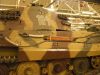
King Tiger showing Zimmerit181 viewsZimmerit was a non-magnetic coating produced for German armored fighting vehicles during World War II for the purpose of combating magnetically attached anti-tank mines, although Germany was the only country to use magnetically adhered mines against tanks in any significant number. It was developed by the German company Chemische Werke Zimmer AG
IMGP0617.JPG
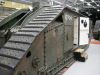
WW1 British tanks181 viewsThe British Mark I-V series were tracked vehicles developed by the British Army during the First World War, and the world's first combat tanks. Born of the need to break the domination of trenches and machine guns over the battlefields of the Western Front, they were the first vehicles to be named "tank", a name chosen as an expedient to maintain secrecy and to disguise its true purpose. It was developed to be able to cross trenches, resist small-arms fire, travel over difficult terrain
PICT1719.JPG
Lanchester Armoured Car181 viewsIn January 1929 the first Lanchesters (along with Rolls-Royce Armoured Cars) were received by the 11th Hussars regiment. Because of slow rate of delivery, it took until 1934 to fully equip the unit. In November the regiment was relocated to Egypt to relieve the 12th Royal Lancers, which returned to Britain and took over the cars. In January-February 1935 a provisional D squadron of the 12th Lancers with eight armoured cars served as a peacekeeping force in the Saar region. On 31 December B and C squadrons were sent again to Egypt with 29 armoured cars as a response to the Italian invasion of Abyssinia and strengthening garrisons in Libya. They were used in patrolling the western frontier.
PICT1776.JPG
T34/85181 viewsThe T-43's turret design was hurriedly adapted by V. Kerichev at the Krasnoye Sormovo Factory to fit the T-34. This was seen as a compromise between advocates for the T-43, and others in the high command who wanted to continue to build as many 76 mm armed T-34s as possible, without interruption. The resulting new T-34-85 tank had a much better gun and finally, a three-man turret with radio (which had previously been in the hull). Now the commander needed only to command the tank,
PICT1788.JPG
Sherman181 viewsThe Army had seven main sub-designations for M4 variants during production: M4, M4A1, M4A2, M4A3, M4A4, M4A5, and M4A6. These designations did not necessarily indicate linear improvement: for example, A4 was not meant to indicate it was better than the A3. These sub-types indicated standardized production variations, which were in fact often manufactured concurrently at different locations
PICT1793.JPG
Sherman 17pdr181 viewsResearch conducted by the British No. 2 Operational Research Section, after the Normandy campaign, concluded a Sherman would be set alight 82% of the time following an average of 1.89 penetrations of the tank’s armor; in comparison they also concluded the Panzer IV would catch fire 80% of the time following an average of 1.5 penetrations, the Panther would light 63% of the time following 3.24 penetrations, and the Tiger would catch fire 80% of the time following 3.25 penetrations
IMGP5145.JPG
181 views
IMGP5148.JPG
181 views
3464 files on 347 page(s) 1 - 208 209 210 211 212 213 214 215 216 217 - 347


Visit Madaxeman on

Youtube Logo
Blogger Logo
Facebook Logo
Podbean Logo
Twitter Logo
Spotify Logo
Pinterest Logo
iTunes Logo
Tune In Logo

Podcasts to download from Madaxeman.com

(Also available on Podbean, iTunes and Spotify)


(These are "affiliate links". If you buy something after clicking on them I get a small kickback from eBay)

Page Loads for the 10mm & Museums Gallery:

About This Site & Privacy Information

Powered by Coppermine Photo Gallery