
The Madaxeman
Madaxeman.com's Home Page
  • Home
  • Latest Posts
  • Links Page
  • Battle Reports
  • ADLG Index
  • ADLG Wiki
  • Malifaux
  • C London Club
  • 15mm Gallery
  • 15mm Suppliers
  • Facebook
  • The Podcast
  • 10mm
  • Consent Preferences
 RSS Feed

Madaxemans 10mm & Real World Photo Gallery

Photos from museums, and from my 10mm wargaming collection

  • Home
  • Login
  • Album list
    • Last uploads
    • Last comments
    • Most viewed
    • Top rated
    • By date
    • My Favorites
  • Search

The 10mm & Real World Museums Photo Directory - helping you choose the best 10mm tanks, or dig out real cammo schemes from tanks and other military vehicles in museums and shows around the world. You can also search the directory by manufacturer, army or keyword

Anyone can rate the photos just by clicking on the stars beneath each photo. Ratings use a scale of 0-5 where 5 = excellent and 0 = terrible.

Home > Museums and Shows > Bovington

Most viewed - Bovington
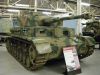
IMGP0544.JPG
Pz IV 243 viewsDesigned as an infantry-support tank, the Panzer IV was not originally intended to engage enemy armor—that function was performed by the lighter Panzer III. However, with the flaws of pre-war doctrine becoming apparent and in the face of Soviet T-34 tanks, the Panzer IV soon assumed the tank-fighting role of its increasingly obsolete cousin. The most widely manufactured and deployed German tank of the Second World War
PICT1857.JPG
Centurion243 views
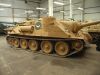
PICT1853.JPG
SU 100242 views
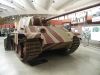
PICT1782.JPG
Panther239 viewsThe Panther was also far cheaper to produce than the Tiger tanks, and only slightly more expensive than the Panzer IV, as its design came to fruition when the Reich Ministry of Armament and War Production was making great efforts to increase war production. Key elements of the Panther design, such as its armor, transmission, and final drive, were compromises made specifically to improve production rates and address Germany's war shortages, whereas other elements such as its highly compact engine and its complex suspension system remained with their elegant but complicated engineering
IMGP0542.JPG
Finnish StuG III 40 Ausf G236 viewsThe final and by far the most common of the StuG series. The Sturmgeschütz III (StuG III) assault gun was Germany's most produced armoured fighting vehicle during World War II. It was built on the chassis of the proven Panzer III tank. Initially intended as a mobile, armoured light gun for infantry support, the StuG was continually modified and was widely employed as a tank destroyer.
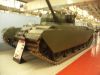
PICT1847.JPG
Contentious235 viewsThe vehicle's role was for a flexible strategic response to conflicts around the last vestiges of Empire. Despite the low intensity of such conflicts, it was assumed that the increasing supply of Soviet T-54 tanks to satellite states would require an anti-tank capability greater than previous light tanks.
PICT1749.JPG
Pz III234 viewsAround the time of Operation Barbarossa, the Panzer III was numerically the most important German tank. At this time the majority of the available tanks (including re-armed Ausf. E and F, plus new Ausf. G and H models) had the 50-millimetre (1.97 in) KwK 38 L/42 cannon which also equipped the majority of the tanks in North Africa.
IMGP0545.JPG
Churchill AVRE 233 viewsThe Armoured Vehicle Royal Engineers was a Churchill III or IV equipped with the Petard, a 290 mm Spigot mortar, throwing the 40 lb (18 kg) "Flying dustbin" with its 28 pound high explosive warhead; a weapon designed for the quick levelling of fortifications developed by MD1. The petard was reloaded by traversing the turret to the co-driver's hatch
IMGP0541.JPG
Finnish StuG III 40 Ausf G229 viewsThe final and by far the most common of the StuG series. The Sturmgeschütz III (StuG III) assault gun was Germany's most produced armoured fighting vehicle during World War II. It was built on the chassis of the proven Panzer III tank. Initially intended as a mobile, armoured light gun for infantry support, the StuG was continually modified and was widely employed as a tank destroyer.
IMGP0549.JPG
Locust in a Hamilcar Glider frame227 viewsThe Light Tank (Airborne) M22 or Locust was an American-designed airmobile light tank which was produced during World War II. The Locust began development in 1941 after the British War Office requested that the American government design a purpose-built airborne light tank which could be transported by glider into battle to support British airborne forces.
270 files on 27 page(s) 1 2 3 4 5 6 7 8 9 10 11 - 27


Visit Madaxeman on

Youtube Logo
Blogger Logo
Facebook Logo
Podbean Logo
Twitter Logo
Spotify Logo
Pinterest Logo
iTunes Logo
Tune In Logo

Podcasts to download from Madaxeman.com

(Also available on Podbean, iTunes and Spotify)


(These are "affiliate links". If you buy something after clicking on them I get a small kickback from eBay)

Page Loads for the 10mm & Museums Gallery:

About This Site & Privacy Information

Powered by Coppermine Photo Gallery