
The Madaxeman
Madaxeman.com's Home Page
  • Home
  • Latest Posts
  • Links Page
  • Battle Reports
  • ADLG Index
  • ADLG Wiki
  • Malifaux
  • C London Club
  • 15mm Gallery
  • 15mm Suppliers
  • Facebook
  • The Podcast
  • 10mm
  • Consent Preferences
 RSS Feed

Madaxemans 10mm & Real World Photo Gallery

Photos from museums, and from my 10mm wargaming collection

  • Home
  • Login
  • Album list
    • Last uploads
    • Last comments
    • Most viewed
    • Top rated
    • By date
    • My Favorites
  • Search

The 10mm & Real World Museums Photo Directory - helping you choose the best 10mm tanks, or dig out real cammo schemes from tanks and other military vehicles in museums and shows around the world. You can also search the directory by manufacturer, army or keyword

Anyone can rate the photos just by clicking on the stars beneath each photo. Ratings use a scale of 0-5 where 5 = excellent and 0 = terrible.

Home > Museums and Shows > Bovington

Most viewed - Bovington
PICT1714.JPG
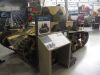
WW1 Tank171 viewsThe prototype Mark I, ready in December 1915, was called "Mother" (previous names having been "The Wilson Machine", "Big Willie", and "His Majesty's Land Ship Centipede"). Mother was successfully demonstrated to the Landships Committee in early 1916; it was run around a course simulating the front including trenches, parapets, craters and barbed wire obstacles
PICT1736.JPG
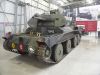
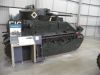
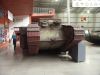
Mk IV A13 Mk II171 viewsThe A13 MkII, Cruiser Tank Mk IV, had a maximum armour thickness of 30 mm, and faceted armour was mounted on the original turret's sides and rear. This gave the tank a far more modern appearance. Some Mk III tanks were re-built to Mk IV standard while at the factory.
IMGP0626.JPG
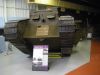
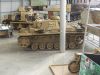
WW1 British tanks170 views
PICT1716.JPG
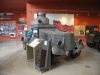
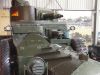
Crossley Armoured Car 170 viewsIn 1923 Crossley supplied a number of chassis to Vickers at Crayford to be fitted with armoured car superstructure. Completed vehicles were sold to India (approx 100), Britain, South Africa, Canada, Argentina (six supplied in 1927) and Japan (12 supplied in 1925).
PICT1728.JPG
Vickers Mk E Tank170 viewsThe British Army evaluated the Mark E, but rejected it, apparently due to questions about the reliability of the suspension. Vickers then started advertising the design to all buyers, and soon received a trickle of orders eventually including USSR, Greece, Poland, Bolivia, Siam, Finland, Portugal, China and Bulgaria. A Thai order was placed, but taken over by the British when the war started. Vickers built a total of 153 (the most common figure) Mark E's.
PICT1730.JPG
Medium Tank Mk II170 viewsThe Vickers Medium Mark II and its predecessor the Vickers Medium Mark I replaced some of the Mark V heavy tanks. Both tanks equipped the Royal Tank Regiments until they were phased out starting in 1938. In November 1939, some Medium Mark IIs were sent to Egypt for experiments being conducted by Major-General Sir Percy Hobart and his Mobile Division (Egypt), but the Vickers Mediums in Egypt were also phased out before Italy declared war in June 1940. The Mediums were used for initial instruction in driver training.
PICT1775.JPG
Pz III170 viewsPanzer III was the common name of a medium tank that was developed in the 1930s by Germany and was used extensively in World War II. The official German designation was Panzerkampfwagen III Sd Kfz. 141 (abbreviated PzKpfw III) translating as "armoured fighting vehicle". It was intended to fight other armoured fighting vehicles and serve alongside the infantry-supporting Panzer IV. However, as the Germans faced the formidable T-34, stronger anti-tank guns were needed. Since the Panzer IV had a bigger turret
PICT1791.JPG
DD Sherman170 viewsDD tanks worked by erecting a 'flotation screen' around the tank, which enabled it to float, and had a propeller powered by the tank's engine to drive them in the water.
The DD tanks were one of the many specialised assault vehicles, collectively known as Hobart's Funnies, devised to support the planned invasion of Europe
PICT1715.JPG
WW1 Tank169 viewsThe first order for tanks was placed on 12 February 1916. Fosters were to build 25 and Metropolitan Carriage and Wagon 75. One hundred and fifty Mark Is were built.
PICT1719.JPG
Lanchester Armoured Car169 viewsIn January 1929 the first Lanchesters (along with Rolls-Royce Armoured Cars) were received by the 11th Hussars regiment. Because of slow rate of delivery, it took until 1934 to fully equip the unit. In November the regiment was relocated to Egypt to relieve the 12th Royal Lancers, which returned to Britain and took over the cars. In January-February 1935 a provisional D squadron of the 12th Lancers with eight armoured cars served as a peacekeeping force in the Saar region. On 31 December B and C squadrons were sent again to Egypt with 29 armoured cars as a response to the Italian invasion of Abyssinia and strengthening garrisons in Libya. They were used in patrolling the western frontier.
270 files on 27 page(s) 1 - 16 17 18 19 20 21 22 23 24 25 - 27


Visit Madaxeman on

Youtube Logo
Blogger Logo
Facebook Logo
Podbean Logo
Twitter Logo
Spotify Logo
Pinterest Logo
iTunes Logo
Tune In Logo

Podcasts to download from Madaxeman.com

(Also available on Podbean, iTunes and Spotify)


(These are "affiliate links". If you buy something after clicking on them I get a small kickback from eBay)

Page Loads for the 10mm & Museums Gallery:

About This Site & Privacy Information

Powered by Coppermine Photo Gallery