
The Madaxeman
Madaxeman.com's Home Page
  • Home
  • Latest Posts
  • Links Page
  • Battle Reports
  • ADLG Index
  • ADLG Wiki
  • Malifaux
  • C London Club
  • 15mm Gallery
  • 15mm Suppliers
  • Facebook
  • The Podcast
  • 10mm
  • Consent Preferences
 RSS Feed

Madaxemans 10mm & Real World Photo Gallery

Photos from museums, and from my 10mm wargaming collection

  • Home
  • Login
  • Album list
    • Last uploads
    • Last comments
    • Most viewed
    • Top rated
    • By date
    • My Favorites
  • Search

The 10mm & Real World Museums Photo Directory - helping you choose the best 10mm tanks, or dig out real cammo schemes from tanks and other military vehicles in museums and shows around the world. You can also search the directory by manufacturer, army or keyword

Anyone can rate the photos just by clicking on the stars beneath each photo. Ratings use a scale of 0-5 where 5 = excellent and 0 = terrible.

Home > Museums and Shows > Bovington

Most viewed - Bovington
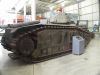
PICT1739.JPG
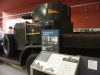
Char B 179 viewsThe Char B1 was a French heavy tank manufactured before World War II.
The Char B1 was a specialised heavy break-through vehicle, originally conceived as a self-propelled gun with a 75 mm howitzer in the hull; later a 47 mm gun in a turret was added, to allow it to function also as a Char de Bataille, a "battle tank" fighting enemy armour, equipping the armoured divisions of the Infantry Arm
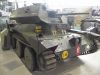
PICT1737.JPG
Mk IV A13 Mk II179 viewsThe Tank, Cruiser, Mk IV (A13 Mk II) was a British cruiser tank of the Second World War. It followed directly on from the Tank, Cruiser, Mk III (A13 Mk I). The first Mk IVs were Mk IIIs with extra armour fitted to the turret. Later Mk IVAs were built with the complete extra armour.
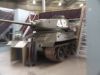
PICT1784.JPG
T34/85179 viewsFollowing the end of the war, a further 2,701 T-34s were built prior to the end of production. Under license, production was restarted in Poland (1951–55) and Czechoslovakia (1951–58), where 1,380 and 3,185 T-34-85s were made, respectively, by 1956
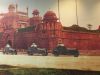
PICT1718.JPG
Armoured cars in Delhi178 viewsRead about them on a dedicated CRossley site
PICT1720.JPG
Lanchester Armoured Car178 viewsBy 1939, most Lanchesters (13 Mk I, 1 Mk IA, 5 Mk II, 3 Mk IIA) were sent to the Far East and assigned to the Selangor and Perak battalions of Federated Malay States Volunteer Force, the Singapore Volunteer Corps, Straits Settlements Volunteer Force and the 2nd battalion of Argyll & Sutherland Highlanders in Malaya. Some of these took part in the Malayan Campaign (December 1941 - 15 February 1942) against Japan.
PICT1741.JPG
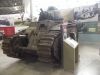
Char B178 viewstarting in the early twenties, its development and production were repeatedly delayed, resulting in a vehicle that was both technologically complex and expensive, and already obsolescent when real mass-production of a derived version, the Char B1 "bis", started in the late thirties. Although a second uparmoured version, the Char B1 "ter", was developed, only two prototypes were built.
PICT1748.JPG
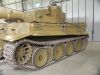
The Tiger I178 viewsThe Tiger differed from earlier German tanks principally in its design philosophy. Its predecessors balanced mobility, armour and firepower, and were sometimes outgunned by their opponents.
The Tiger I represented a new approach that emphasised firepower and armour. While heavy, this tank was not slower than the best of its opponents.
PICT1780.JPG
Panther178 viewsThe Panther tank was a compromise of various requirements. While having essentially the same engine as the Tiger I tank, it had better frontal armor (including the benefit of a sloped armor, increasing effective armor depth), better gun penetration, was lighter and thus faster, and could traverse rough terrain better than the Tigers. The tradeoff was weaker side armor.
PICT1783.JPG
Panther178 viewsThe Panther was a direct response to the Soviet T-34 and KV-1 tanks. First encountered on 23 June 1941, the T-34 outclassed the existing Panzer III and IV At the insistence of General Heinz Guderian, a special Panzerkommision was dispatched to the Eastern Front to assess the T-34 mong the features of the Soviet tank considered most significant were the sloping armor, which gave much improved shot deflection and also increased the effective armor thickness against penetration, the wide track, which improved
PICT1790.JPG
Churchill Crocodile178 viewsThe flamethrower equipment was produced as a kit that REME workshops could fit in the field, converting any available Churchill Mk VII. The conversion kit consisted of the trailer, an armoured pipe fitted along the underside of the tank, and the projector, which replaced the hull mounted Besa machine gun. The Crocodile was therefore still able to function as a gun tank with its turret mounted Ordnance QF 75 mm gun.
270 files on 27 page(s) 1 - 12 13 14 15 16 17 18 19 20 21 - 27


Visit Madaxeman on

Youtube Logo
Blogger Logo
Facebook Logo
Podbean Logo
Twitter Logo
Spotify Logo
Pinterest Logo
iTunes Logo
Tune In Logo

Podcasts to download from Madaxeman.com

(Also available on Podbean, iTunes and Spotify)


(These are "affiliate links". If you buy something after clicking on them I get a small kickback from eBay)

Page Loads for the 10mm & Museums Gallery:

About This Site & Privacy Information

Powered by Coppermine Photo Gallery