
The Madaxeman
Madaxeman.com's Home Page
  • Home
  • Latest Posts
  • Links Page
  • Battle Reports
  • ADLG Index
  • ADLG Wiki
  • Malifaux
  • C London Club
  • 15mm Gallery
  • 15mm Suppliers
  • Facebook
  • The Podcast
  • 10mm
  • Consent Preferences
 RSS Feed

Madaxemans 10mm & Real World Photo Gallery

Photos from museums, and from my 10mm wargaming collection

  • Home
  • Login
  • Album list
    • Last uploads
    • Last comments
    • Most viewed
    • Top rated
    • By date
    • My Favorites
  • Search

The 10mm & Real World Museums Photo Directory - helping you choose the best 10mm tanks, or dig out real cammo schemes from tanks and other military vehicles in museums and shows around the world. You can also search the directory by manufacturer, army or keyword

Anyone can rate the photos just by clicking on the stars beneath each photo. Ratings use a scale of 0-5 where 5 = excellent and 0 = terrible.

Home > Museums and Shows > Bovington

Most viewed - Bovington
IMGP0571.JPG
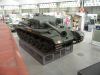
T-26190 viewsThe T-26 tank was a Soviet light infantry tank used during many conflicts of the 1930s as well as during World War II. It was a development of the British Vickers 6-Ton tank and is widely considered one of the most successful tank designs of the 1930s
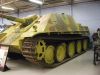
IMGP0585.JPG
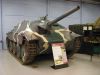
Jagdpanther190 viewsThe Jagdpanther had a good power-to-weight ratio and a powerful main gun, which enabled it to destroy any type of Allied tank. Based on the existing Panther Ausf G chassis, the vehicle did not suffer too many mechanical problems. It had an upgraded transmission (the Zf Ak 7-400 heavy duty) - which had been planned for the Panther II - and final drive to counter the Panther's main weakness. It was manned by a crew of six: a driver, radio-operator, commander, gunner and two loaders
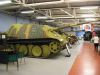
IMGP0610.JPG
Jagdpanther190 viewsJadgpanthers equipped heavy antitank battalions ( schwere Panzerjäger-Abteilung ) and served mainly on the Eastern Front. In the West, they were first encountered in very small numbers late in the Battle of Normandy, where the German 654 schwere Panzerjäger-Abteilung ("654th Heavy Antitank Battalion") deployed about 12 Jagdpanthers against British units. Later, significant numbers were concentrated in the West for the Ardennes Offensive.
IMGP0628.JPG
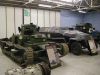
WW1 British tanks190 views
PICT1705.JPG
Centurion190 viewsThe Centurion, introduced in 1945, was the primary British main battle tank of the post-World War II period. It was a successful tank design, with upgrades, for many decades. The chassis was also adapted for several other roles.
Development of the tank began in 1943 and manufacture of the Centurion began in January 1945, six prototypes arriving in Belgium less than a month after the war in Europe ended in May 1945.
PICT1774.JPG
T34/85190 viewsAlthough a T-34-85 was still not a match for a Panther, the improved firepower made it much more effective than before. The decision to improve the existing design instead of tooling up for a new one allowed the Soviets to manufacture tanks in such numbers that the difference in capabilities could be considered insignificant.
IMGP0579.JPG
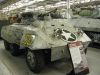
M8 Greyhound189 viewsThe M8 Light Armored Car was a 6x6 armored car produced by the Ford Motor Company during World War II. It was used by the U.S. and British troops in Europe and the Far East until the end of the war. The vehicle was widely exported and as of 2006 still remains in service with some third world countries
IMGP0587.JPG
Hetzer189 viewsThe Jagdpanzer 38(t) (Sd.Kfz. 138/2), later known as Hetzer ("baiter"), was a German light tank destroyer of the Second World War based on a modified Czechoslovakian Panzer 38(t) chassis. The project was inspired by the Romanian "Mareşal" tank destroyer.
IMGP0593.JPG
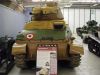
SOMUA S35 189 viewsDuring the German invasion of May 1940, the SOMUA S35 proved itself to be a tactically effective type, but this was negated by strategic mistakes in deploying its units. After the defeat of France in June 1940, limiting production to a number of 430, captured SOMUA S35s were used by the Axis powers. A derived type, the SOMUA S40, with an improved suspension, lowered hull cast and welded turret armour, had been planned to replace the original version on the production lines in July 1940.
IMGP0595.JPG
Matilda I189 viewsThe Tank, Infantry, Mk I, Matilda I (A11)[1] was a British infantry tank of the Second World War. It is not to be confused with the later model Tank, Infantry Mk II (A12), also known as the "Matilda II" which took over the "Matilda" name after the early part of the war when the first Matilda was withdrawn from combat service. They were of totally different design and did not share components, but did have some similar traits because they were both designed to be infantry tanks, a type of tank that tended to sacrifice speed for increased armour protection.
270 files on 27 page(s) 1 - 7 8 9 10 11 12 13 14 15 16 - 27


Visit Madaxeman on

Youtube Logo
Blogger Logo
Facebook Logo
Podbean Logo
Twitter Logo
Spotify Logo
Pinterest Logo
iTunes Logo
Tune In Logo

Podcasts to download from Madaxeman.com

(Also available on Podbean, iTunes and Spotify)


(These are "affiliate links". If you buy something after clicking on them I get a small kickback from eBay)

Page Loads for the 10mm & Museums Gallery:

About This Site & Privacy Information

Powered by Coppermine Photo Gallery